
Cats move through a home differently from people. They jump onto the highest shelf, squeeze behind the washing machine, chew whatever dangles and sleep in any warm, enclosed space. Most of the physical dangers in a house come from those habits: a hot hob, a looped blind cord, an open dryer door.
This guide shows how to cat proof your home with an audit you can finish in a weekend. You go through the house one room at a time, look at each room the way a cat does, and fix what you find. If you have just adopted a cat or kitten, do this before the first night if you can, and again after the first week, when you know which rooms your cat actually uses.
Get down to cat height and walk the house
Start with a notepad or a notes app on your phone. Then get on your hands and knees and look at each room from floor level. Stand on a chair and look again from the height of the highest surface your cat could reach. A kitten can climb a curtain; an adult cat can often jump from the floor to the top of a fridge or wardrobe.
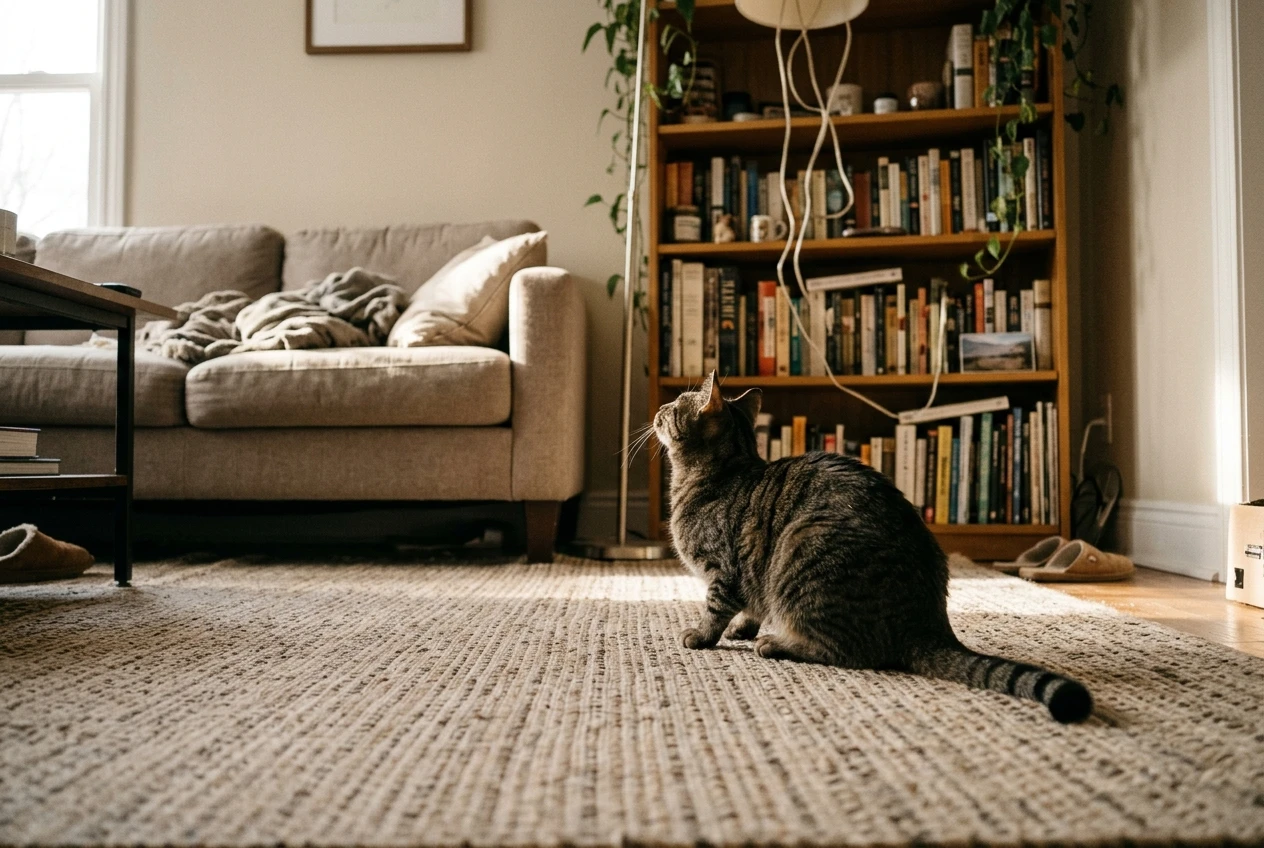
At each stop, look for four kinds of problem:
- Things that dangle: cords, blind pulls, ribbons, drawstrings.
- Things that heat up: hobs, irons, heaters, hair tools, lamps with exposed bulbs.
- Things that close: doors, drawers, lids, appliances, recliner footrests.
- Things that fall: shelves, tall furniture, loose items on high edges.
Write down each one with its room. Fixing as you go is tempting, but a full list first lets you see which fixes are cheap and quick (a cable tie, a latch) and which need a purchase or a wall anchor. It also shows you the routes your cat will take between rooms.
Watch your cat for a few minutes too. Where it jumps, hides and sniffs tells you which parts of the audit matter most. A cat that ignores the kitchen counter needs less attention there than one that sits beside the kettle every morning.
Kitchen: hot surfaces, open cupboards, bins and counter climbing
The kitchen has the most heat and the most small, tempting objects, so do it first.
Hot surfaces
Cats walk across hobs, and they do not know which burner is on. An induction hob can stay hot after you switch it off even when it looks cool, and a gas or electric ring can be switched on by a paw if the control knobs are at the front. Fit knob covers or remove the knobs when you are out of the room, and make a habit of keeping the hob covered with a lid or a board when it is not in use.
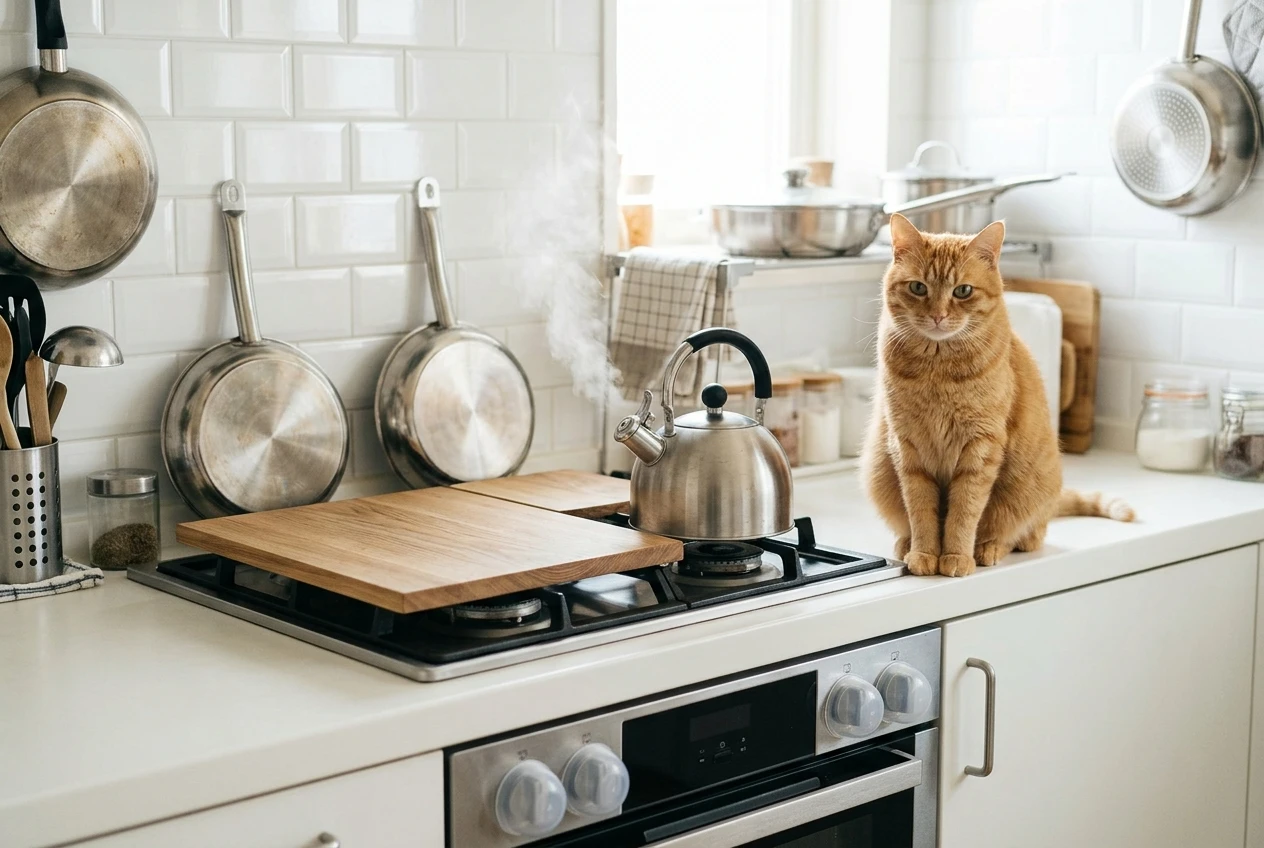
Teach the whole household the same rule: nobody leaves a hot pan, kettle or slow cooker where a cat can reach it, and nobody leaves the oven door open to cool down with the cat in the room. If your cat likes the warm top of the toaster or the back of the oven, consider this a cue to give it a heated bed somewhere safer, not just a warning to watch for.
Appliances
Check inside the dishwasher, the oven, the microwave and the fridge before you close them. Cats climb into open appliances to explore the smell of food and the warmth, and a closed door can trap them in seconds. Keep the dishwasher closed between loads, since it also holds sharp knives and food residue.
Cupboards, drawers and bins
Cats can open lower cupboards with a paw. Use child safety latches on any cupboard that holds cleaning products, foil, plastic bags, string, elastic bands or small tools. Keep drawers with knives, skewers and corks shut as well.
For bins, the options are a bin with a locking lid, one that sits inside a cupboard, or a taller, heavier bin that cannot be knocked over. Cooked bones, foil, cling film, meat netting and the string from a roast all end up in kitchen waste, and all of them are worth keeping out of reach. A cat that has learned the bin is a good place to find food will keep trying it.
Counter climbing
Cats jump onto counters because the counters are high and often hold food. You will not stop a cat from wanting height, so give it somewhere better: a cat tree or a sturdy shelf near the kitchen, in sight of you. Keep counters clear of loose items, put knives in a block or drawer, and wipe up spills straight away, since a cat that finds food on the counter will check it again. Treat the counter as unsafe whenever you are cooking, and keep the cat out of the kitchen by closing the door if it will not stay off.
Living room: cords, blinds, tall furniture and recliners
Living rooms collect electronics, soft furnishings and heavy furniture, and they are where your cat will probably spend most of its time with you.
Cords and cables
Cats chew cords, especially kittens teething. A chewed cable can burn the mouth or cause a shock. Bundle loose cables into cord covers or a cable box, run them along the skirting board behind furniture, and unplug chargers and small appliances when you are not using them. Keep a close eye on the cord of any lamp with a bulb that gets hot.
Blind cords and curtains
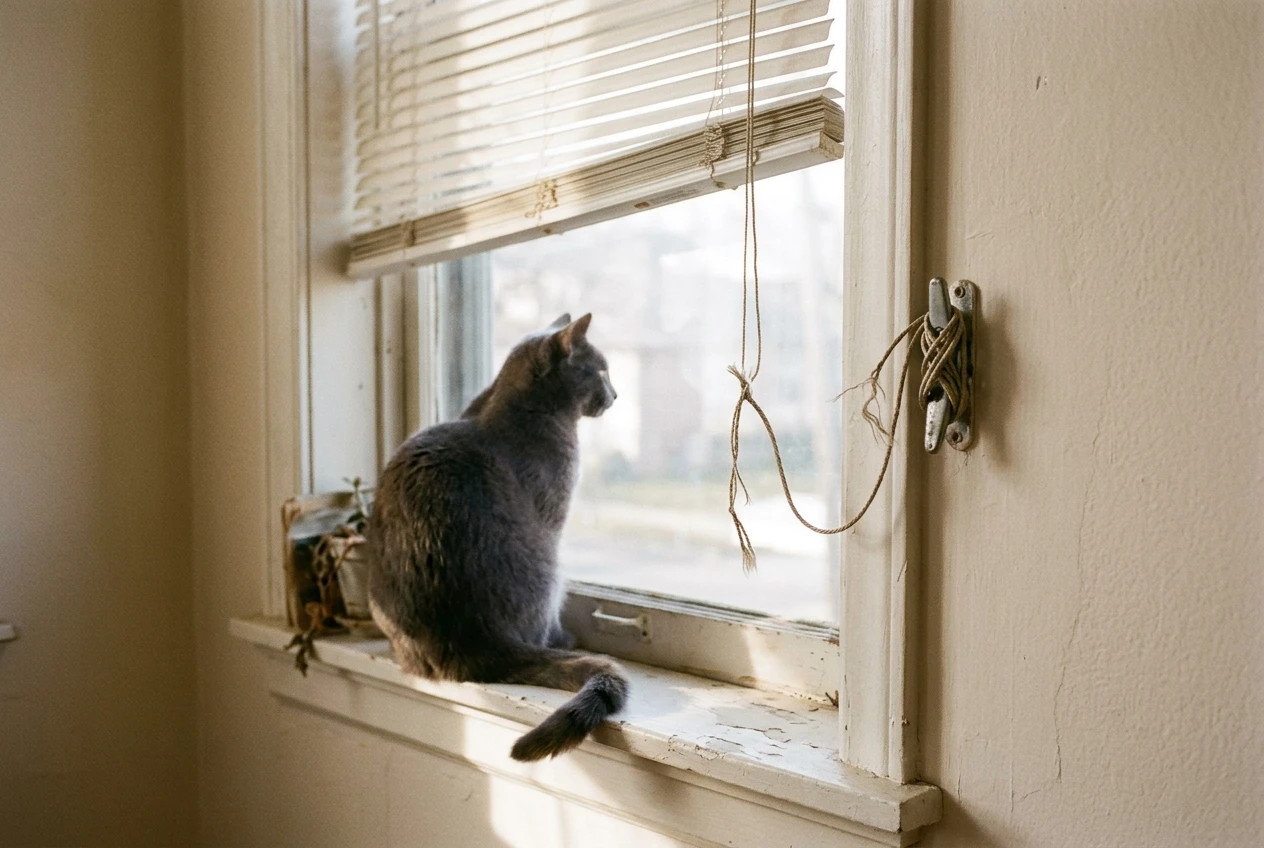
Looped blind cords can strangle a cat that gets its head through. Cut the loop so the ends hang free, use a cleat to wind the cord out of reach, or switch to cordless blinds. Check curtain tie-backs and tassels too. Venetian blinds with slats cats push through can bend or snap, so check these for damage after a few days with a new cat.
Tall furniture and tip-over risks
Bookcases, TV stands, tall lamps and cat trees can fall if a cat leaps onto them. Anchor tall furniture to the wall with a bracket or strap. Test every cat tree by pushing on the top; if it wobbles, it is too light or too narrow for the cat’s weight and jump. A wide, heavy base is the most useful feature of any climbing structure.
Move breakable items off high shelves where a cat can knock them over. Heavy decorations, glass vases and candles are the usual casualties.
Recliners, sofa beds and folding furniture
Cats climb into the mechanism of recliners and fold-out sofas to hide or nap. Look under and inside before you close the footrest or fold the bed, and check that your cat is not behind you. Teach everyone in the house to do the same, because a cat can be crushed in a moment. If the cat is a regular hider in the furniture, block the gap at the base with a board or a snug fabric skirt.
Open flames and heaters
Never leave candles, wax melts on a warmer or a lit fireplace unattended with a cat in the room. Put a fire guard in front of an open fire, and use a heater with a tip-over shut-off and a cool-touch casing if you use one.
Scratching
Furniture damage is not a safety hazard in the same way, but a cat with nowhere to scratch will pick the sofa. If that is already happening, the article on how to stop a cat from scratching the furniture covers what to put where, so your living room stays in one piece.
Bedroom: wardrobes, string, hair ties and small objects cats swallow
A bedroom is full of small items, and cats swallow them.
String and thread
Cats love string and often swallow it, which can cause a serious intestinal blockage. Keep sewing thread, dental floss, ribbon, yarn, shoelaces, earphone cables and fishing line in a closed container. Needles attached to thread are an emergency if swallowed. If you see a piece of string hanging from your cat’s mouth or rear end, do not pull it. Call your vet immediately, because pulling can cause internal damage.
Hair ties and other small objects
Hair ties, rubber bands, hair clips, earplugs, coins, jewellery, buttons and pen lids all look like toys on the floor. Keep them in a drawer or a lidded box, and check the floor and bedside table before you leave the room. Cat-safe toys should be larger than anything a cat can swallow, with no loose parts.
Wardrobes and drawers
Cats like to get inside wardrobes and drawers because they are dark and quiet. Check inside before you close the door, especially if the cat has been missing for a few minutes. Keep wardrobe doors closed when you are not using them, and add a latch if your cat has worked out how to open them. Mothballs and some laundry sachets also sit in wardrobes; the hazards article linked later in this guide covers those.
Cords, chargers and lamps
Bedrooms usually have several phone chargers and bedside lamps. Unplug them or run the cables where the cat cannot reach, using the same cord covers as in the living room. Hair straighteners, curling tongs and irons stay hot for a long time after use, so let them cool on a heatproof surface well out of reach, or keep them in a closed drawer.
Bedding and the door
If your cat sleeps in the bedroom, decide on night-time rules early. A closed door keeps cats from getting into trouble while you sleep, but check that no cord, mesh or open window inside the room offers a way to get hurt. If you have a cat that wakes you early, the guide on how to train a cat to sleep at night is worth reading, and a sleeping routine also keeps a cat out of the cupboards.
Bathroom and laundry: toilet lids, the dryer, medicines and tight spaces
These two rooms combine water, heat, closed doors and tight corners.
Toilet lids and standing water
Keep the toilet lid down. A kitten can fall in and be unable to climb out, and the water may hold cleaning tablets or cleaning residue. Empty buckets, mop pails and the bath after use, because a cat that falls into deep water with smooth sides can drown. Close the door, or keep it closed at least when nobody is in the room.
The washing machine and dryer
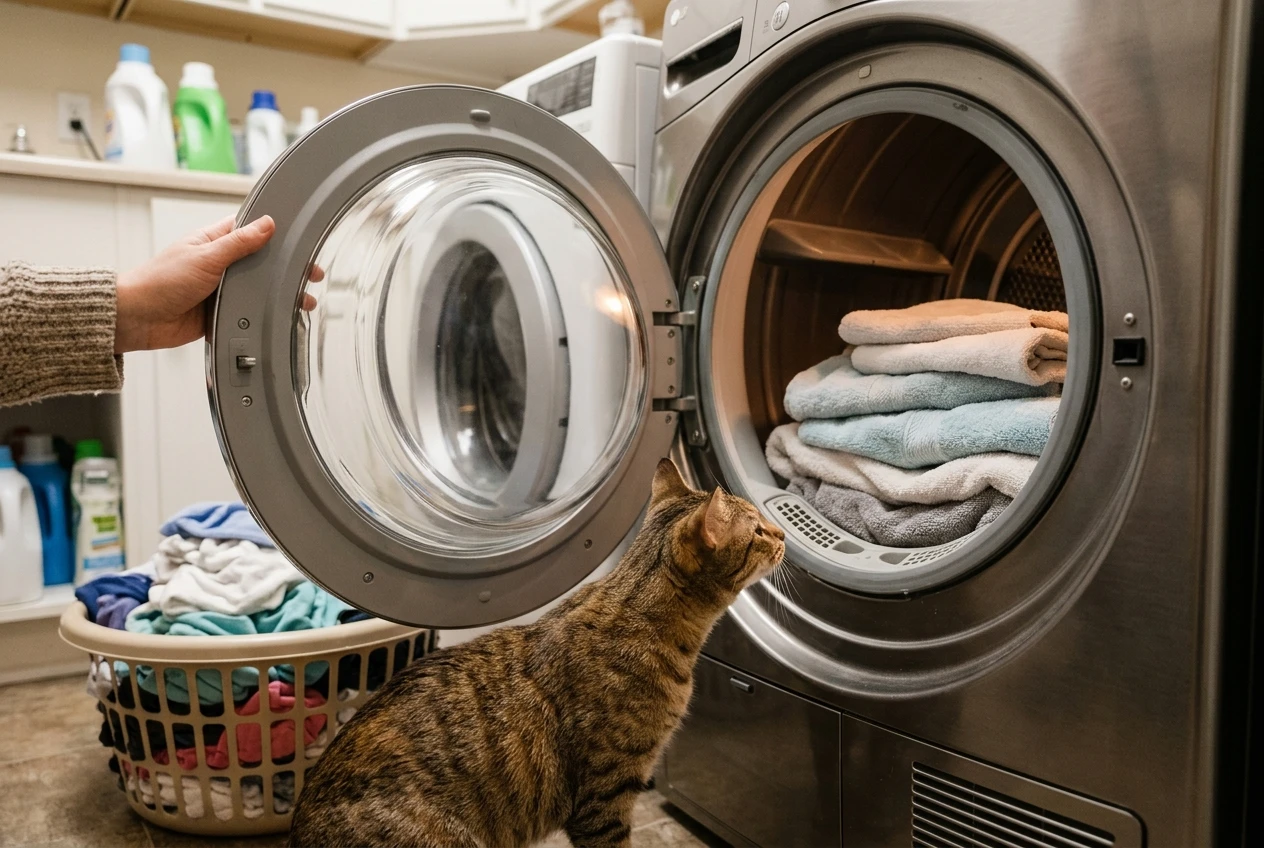
The most dangerous habit in a laundry room is leaving the door of a machine open. Cats climb into drums, especially a warm dryer or a pile of clothes. Always look in and, ideally, run your hand around the drum before you shut the door and start a cycle. Keep the door closed when the machine is not in use. Check piles of clean laundry on the floor as well, since a cat can sleep under a heap of towels.
Medicines and personal care products
Keep all medicines in a closed cabinet or drawer, not on a bedside table or the edge of a sink. A pill that rolls onto the floor is a quick target for a cat. Razor blades, nail clippers, cotton buds and dental floss should be stored in a lidded container. The full list of poisonous household products is in the hazards article linked later in this guide, so this audit only covers whether items are reachable.
Tight spaces
Gaps behind the washing machine, between the dryer and the wall, and under the bath are places a cat can wedge itself. Fill or block them with a board, wide trim or a spare piece of furniture. Check cupboards under the sink for gaps around pipes, since a kitten can slip through and become stuck. If your cat disappears, check these spaces first.
Heat and cords
Hair dryers and straighteners should be unplugged and put away after use. A plug-in air freshener or space heater should be out of the cat’s reach too, since cats that chew cords find them in bathrooms as well as other rooms.
Windows, balconies and doors: screens, gaps and escape routes
Cats love windows, and an open window is a risk even on the ground floor.
Windows and screens
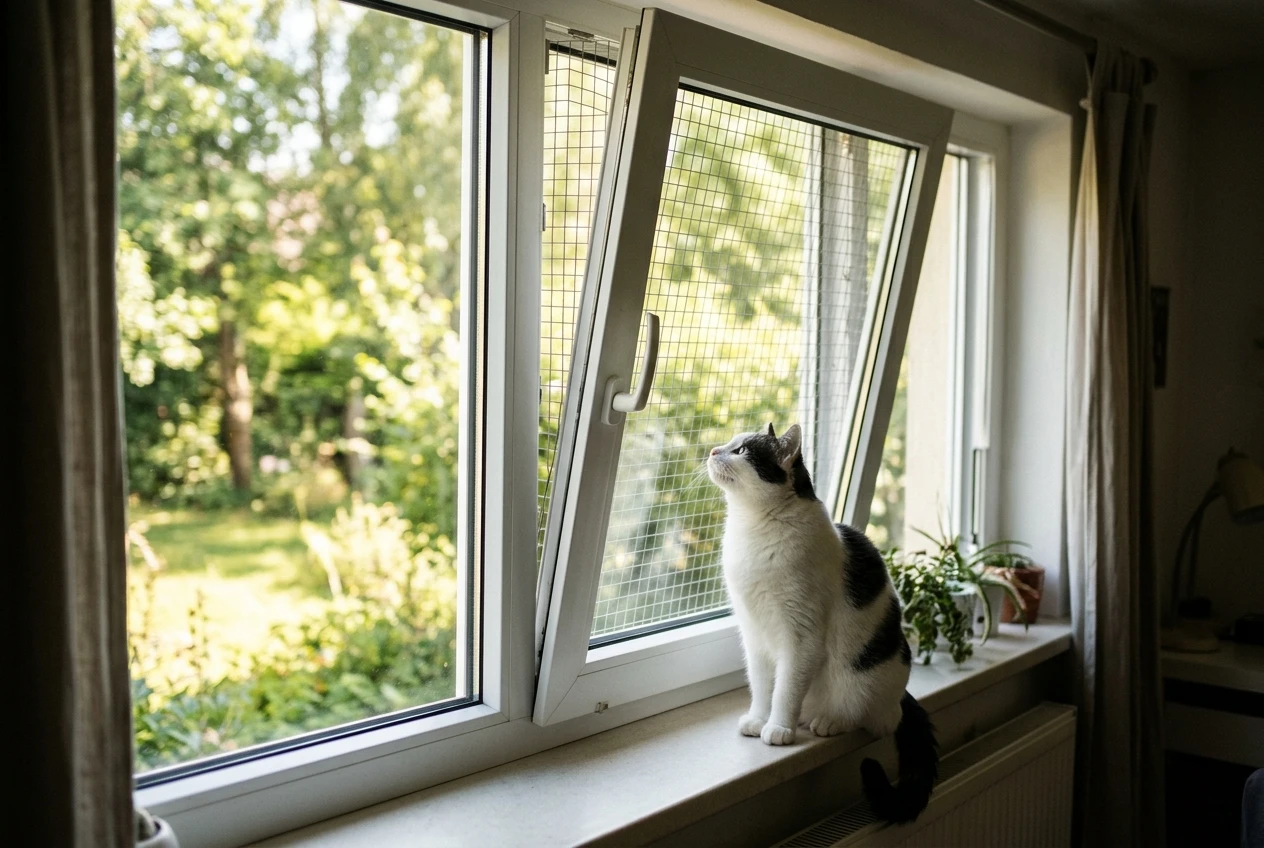
Standard insect screens are made to keep bugs out. They are not made to hold a cat’s weight, and a cat that leans or jumps against one can push it out. Use screens built for pets, or install a sturdy mesh frame that fixes to the window. Do the same for any window you open for fresh air, and never leave a cat alone in a room where a window is open wide.
Tilted windows are a particular danger. A cat can step into the gap at the side of a tilted window and become trapped, which can cause serious injury. Fit a grille, mesh panel or window restrictor so that the gap is closed, or keep the window fully closed or fully open with a secure screen.
Balconies
A balcony can be a safe place for a cat with the right protection, but cats can fall from a height. Enclose the whole balcony with cat-safe netting or mesh and leave no gap at the edges or the corners. Remove furniture the cat could use to jump onto the railing, and check plants and pots for hazards, because a balcony is also a place where cats find things to chew. Supervise your cat the first few times it goes out.
Doors and escape routes
Front doors, back doors and garage doors are where indoor cats get out. A new cat does not know its way home, and a frightened cat may run far. Make a habit of checking where the cat is before you open an outside door. A baby gate or a second closed door gives you a buffer in the hallway, and asking visitors to close doors behind them prevents most accidental escapes. Keep your cat’s microchip details up to date, and put a collar with an ID tag on if your cat tolerates one.
If you are weighing up whether a cat should be allowed outdoors at all, the article Delicate and Deadly: Should Cats Be Kept Indoors? goes through the arguments on both sides.
Plants and poisons: what this guide leaves out and where to read it
This audit covers physical dangers: things that burn, crush, trap, strangle or fall. It leaves out toxic plants, human foods, cleaning chemicals and medicine ingestion, because those need longer lists and more detail than a room-by-room checklist can hold.
For what to look for in each category, read What Is Dangerous to Cats in the House? 11 Household Hazards for Cats. For houseplants, including how to keep a cat from chewing the ones you own, see How To Keep a Cat Away From Plants? (11 Ideas For Indoor Cat Owners).
Once you have read both, return to your notepad and add any items to the room where they sit. A bag of cat-safe plants on the kitchen windowsill or a locked cupboard for cleaners in the laundry room belongs on the same list as the cord covers and the cupboard latches.
Make the safe home worth staying in, then re-audit when things change
A house with every cupboard latched and every cord covered still fails if the cat is bored. Cats that have nothing to climb, scratch, hunt or watch will invent their own entertainment, and it is usually the cords and the bins. Give your cat tall places to sit, a scratching post in each main room, window perches, toys that change through the week and a regular play session. The article on basic indoor cat needs lists what a cat needs in a home to be content as well as safe.
A simple plan for the weekend:
- Saturday morning: walk the house at cat height and write down every hazard.
- Saturday afternoon: fix the kitchen and the living room, since cats spend the most time there.
- Sunday morning: do the bedroom, the bathroom and the laundry.
- Sunday afternoon: check windows, balcony and doors, read the hazard and plant articles, and add anything new to the list.
Then repeat the audit whenever something changes:
- You bring home a kitten or a second cat.
- Your cat reaches a new age or size and can jump higher.
- You move house or rearrange furniture.
- You have guests staying, builders in, or a holiday with decorations and candles.
- The seasons change and you start opening windows or turning on heaters.
Do a quick version once every few months, even if nothing has changed. A cat that has been happy in the same house for a year can find a new route to a risk you thought you had blocked, and a five-minute walk at cat height is usually enough to spot it.