
Hello, Cat Enthusiasts!
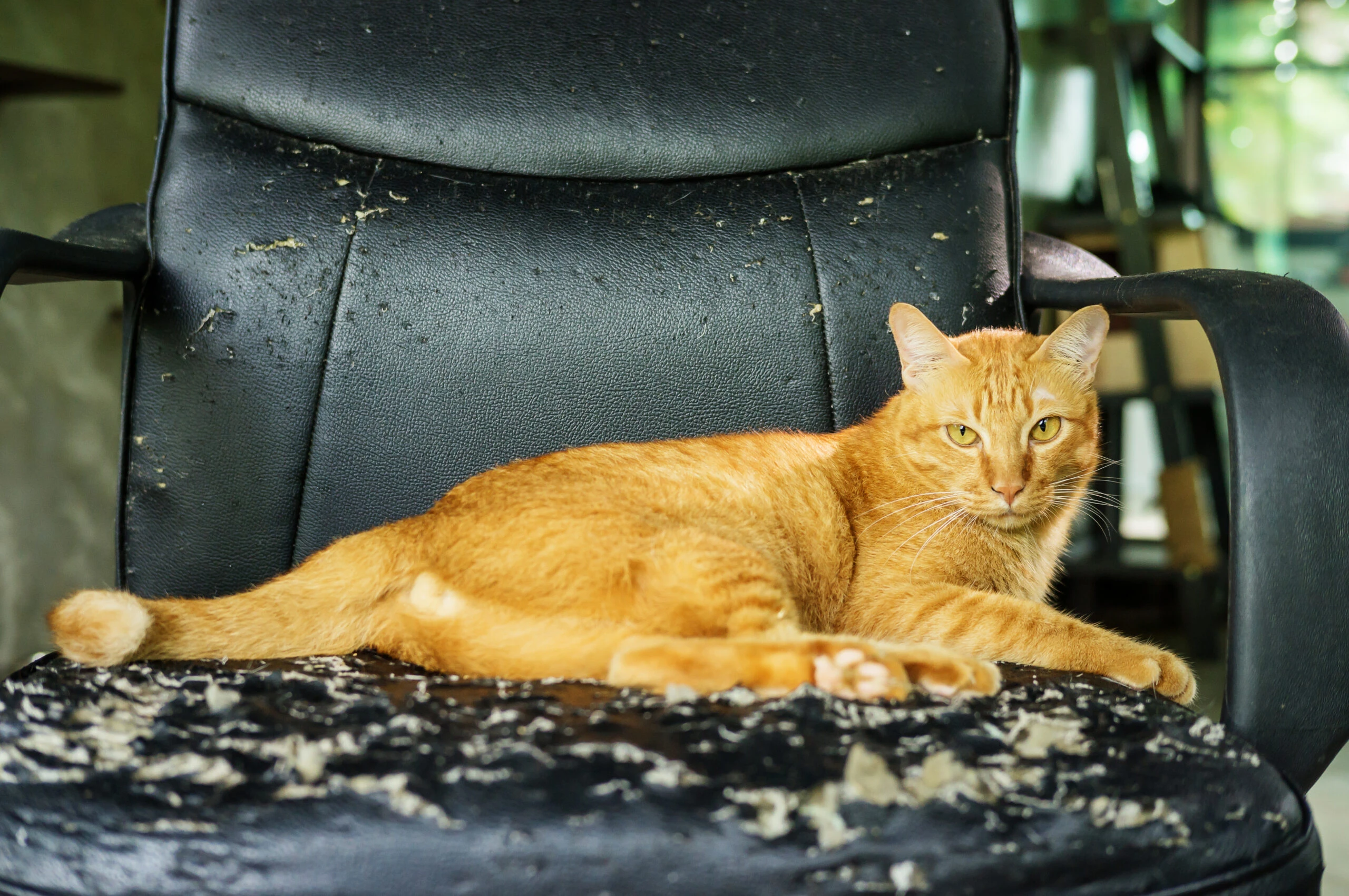
Cats scratch furniture because scratching is something they need to do, and a sofa arm happens to be tall, sturdy and in the middle of the room. A cat that never touched your furniture would still need somewhere to scratch. Stopping the damage therefore means giving the behaviour a better outlet and making the furniture a worse one, and punishing the cat does neither.
This guide covers why cats scratch, how to find out what your cat is targeting and why, how to choose and place scratching surfaces, how to protect what you own while the habit changes, and when scratching points to a problem that needs attention.
Why Cats Scratch in the First Place
Scratching does several jobs at once, which is why it is so hard to talk a cat out of it.
- Nail maintenance. Scratching pulls away the worn outer layer of the claw, which keeps the nails sharp and in good shape.
- Stretching. A cat that digs its claws in and pulls backward works the muscles of its shoulders, back and legs. Many cats scratch right after waking up for this reason.
- Scent marking. Cats have scent glands in their paws, so scratching leaves a chemical message along with the visible marks.
- Visual marking. The scratches themselves are visible signs that a cat has been there.
- Emotional release. Cats often scratch when excited, frustrated or anxious, for instance when you come home or when a meal is about to be served.
Because scratching is built into how cats live, the aim is to redirect it. A cat that is stopped without being offered an alternative will usually pick another spot, or become stressed, which can lead to other problems. If you are building a general picture of what an indoor cat needs to stay settled, our guide to basic indoor cat needs covers the wider setup, and scratching surfaces belong on that list.
Work Out What and Where Your Cat Is Scratching
Before you buy anything, spend a few days watching. The pattern of the damage tells you what kind of replacement your cat will accept.
Look at the surface
Cats tend to be consistent about texture. Check what has been damaged:
- Woven fabric or upholstery with loose threads
- Carpet edges or stair carpet
- Wood, such as table legs or door frames
- Rough, rope-like or corrugated materials such as wicker or cardboard boxes
If a cat likes to hook its claws into loosely woven fabric, a smooth plastic scratcher will not appeal to it. If it prefers carpet, a sisal post may be passed over until it is the better option. The surface your cat already chooses is the best guide to what to offer.
Look at the posture
Some cats scratch vertically, stretching up a sofa arm or a door frame with their bodies fully extended. Others scratch horizontally, raking at a rug or the flat top of a cushion. A few do both. A vertical scratcher needs a tall, stable post. A horizontal scratcher is usually better served by a flat pad or a low angled board.

Look at the location
Note where the damage is. Cats commonly scratch:
- Near their sleeping spots, to stretch after waking
- Beside doorways and at the edges of rooms, which works as marking
- Next to furniture the household uses most, where their scent mixes with yours
- By the front door or windows, where they may be reacting to outside activity
Location matters more than most owners expect. A scratching post in a spare room that nobody uses will be ignored, while the same post beside the favourite sofa arm has a chance.
Give Your Cat Something Better to Scratch
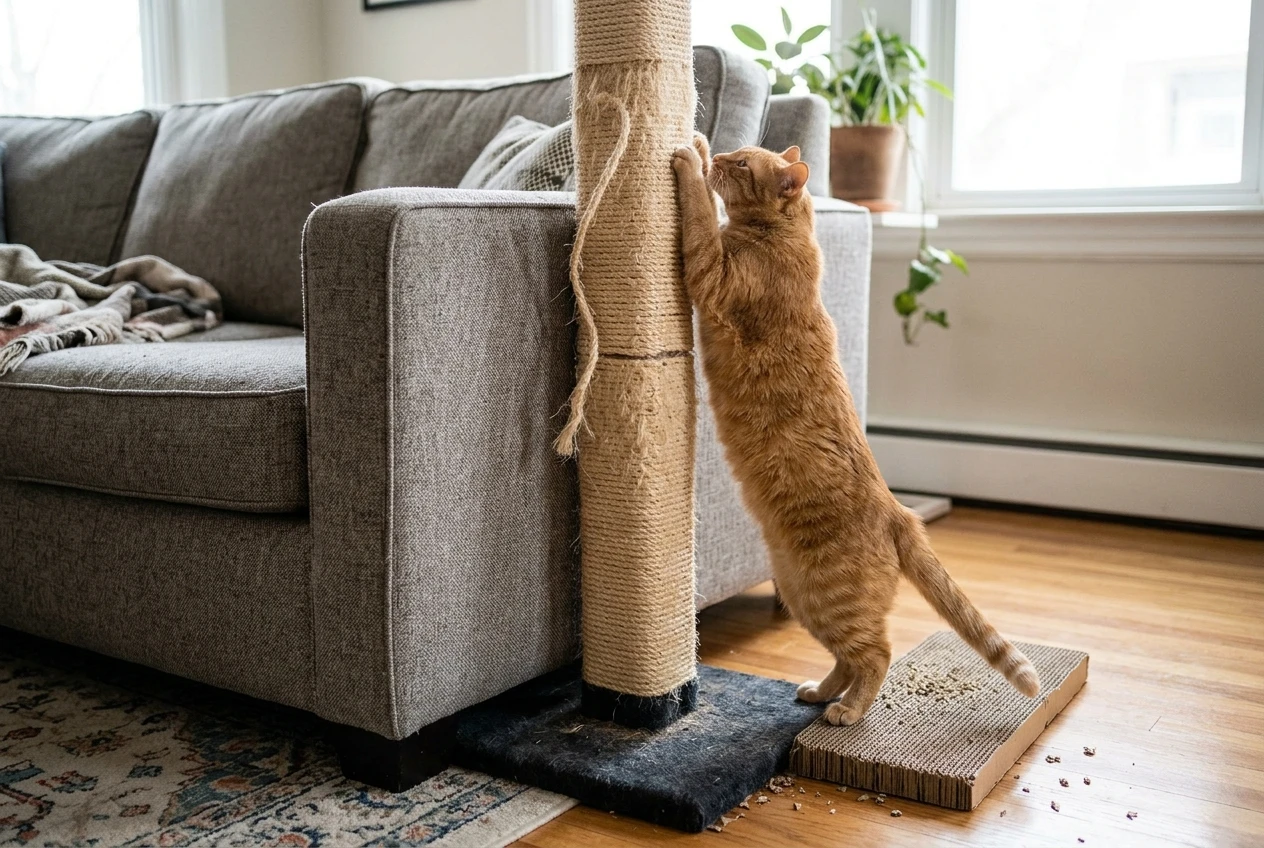
The most effective step is to offer a scratching surface the cat prefers to your furniture. Our separate guide on how to get a cat to use a scratching post goes into training detail, and the points below cover what makes a surface worth using.
Stability
A post that wobbles teaches a cat that it is unreliable. Cats want to put their full weight into a scratch, so the base must be heavy and wide enough that it does not tip or slide. If you can push it over with one hand, a determined cat probably can too.
Height and size
For vertical scratching, the post should be tall enough for the cat to stretch fully upward without hunching. A short post forces a cat to scratch in a cramped way, and it will go back to the sofa, which is taller. Larger and heavier cats need larger, sturdier scratchers than small ones.
Material
Common options include:
- Sisal rope or sisal fabric. Widely used because it is tough and gives claws something to catch and pull against.
- Corrugated cardboard. Often popular for horizontal scratching and inexpensive to replace once it wears down.
- Carpet. Some cats like it, but using it can teach a cat that carpet is acceptable to scratch, which may include the carpet on your floor.
- Natural wood or bark. Appeals to cats that like to scratch tree-like surfaces.
Try more than one material and see which gets used. Many cats like variety, so having a vertical post and a flat scratcher available gives them a choice.
Placement
Put the first scratchers directly beside the furniture your cat is already damaging. If it scratches the corner of the sofa, place the post against that corner. Once the cat is reliably using the post, you can move it a little at a time toward a spot you prefer, though many owners find it simpler to leave it where it works.
Also put scratchers where the cat sleeps and where the household gathers. A cat that stretches and scratches the moment it wakes should find a scratcher within a few steps of its bed.
Make it appealing
A new scratcher needs to be noticed and worth using. A few approaches that cats often respond to:
- Rub a little catnip on the surface, if your cat reacts to catnip.
- Dangle a toy at the top of a vertical post so the cat reaches and grabs on to it.
- Drag a toy along a flat scratcher so the cat pounces and claws at it.
- Place the scratcher where the cat already likes to be, not in a corner it avoids.
If a cat uses the scratcher, praise it calmly or give a small treat right afterward. The link between the action and the reward forms best when the reward arrives straight away. Our article on how cats learn explains why timing matters so much.
Make the Furniture Less Attractive
While your cat is learning to prefer the new surfaces, reduce the appeal of the old ones. Changes that make the furniture unpleasant to scratch, without hurting the cat, tend to work best.
Use texture cats dislike
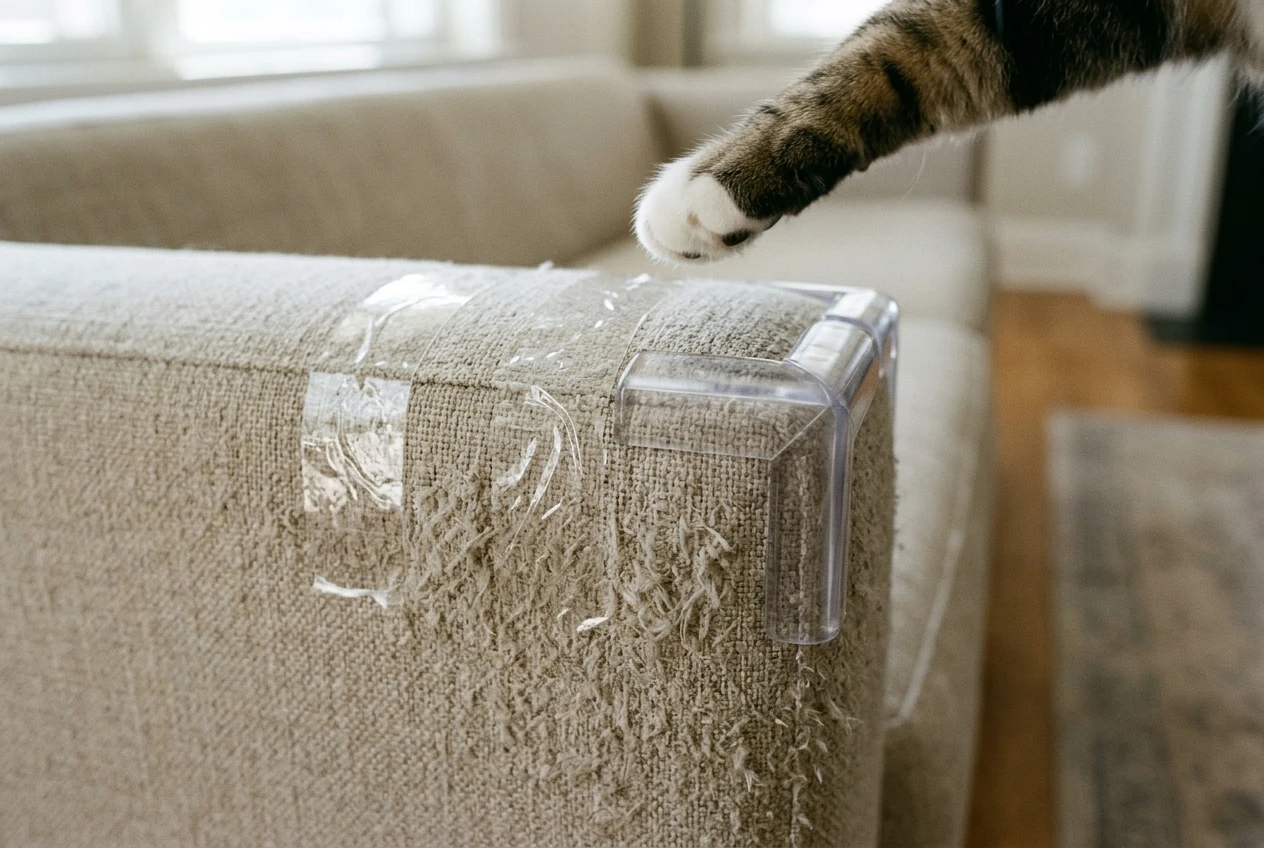
Many cats dislike the feel of sticky surfaces on their paws. Double-sided tape made for furniture, applied to the spots being scratched, is a common deterrent. Other options include:
- Plastic furniture guards or clear protective sheets fixed to corners and arms
- A tightly fitted throw or sheet that is slippery and offers no grip
- A flat board or piece of furniture placed over the favourite spot, so the cat cannot reach the surface
These are temporary measures. Leave them in place until the cat has used the alternative scratchers consistently for some time, then remove them one at a time and watch whether the old habit returns.
Change the layout
If the cat is scratching a sofa arm because it is next to a window, consider whether moving the post to that position, or moving the sofa, solves the underlying reason. Cats scratching near windows are sometimes reacting to birds or passing animals. Blocking the view with a film or moving the furniture away can reduce the excitement that triggers the scratching.
Be careful with scents and sprays
Some owners try citrus scents because many cats dislike them. Be careful with anything homemade. Many essential oils are harmful to cats, even in small amounts or when licked off fur, so do not use oil-based sprays on furniture your cat rubs against. Our list of household hazards for cats includes several common products worth checking before you use them near a cat. Physical barriers and alternative scratchers are safer than scent deterrents.
Cover what you cannot replace
For furniture that is expensive or hard to repair, protective covers or sisal wrap on the corners may make the difference while training takes hold. Some people wrap the scratched part of a sofa leg in sisal rope, which turns the furniture into the cat’s scratcher without losing the furniture. This works best if the cat has already shown a liking for that exact spot.
Teach the Habit Through Redirection
Redirecting is more reliable than correcting. The goal is for the cat to learn that one place pays off and the other does not.
- Interrupt calmly. If you see the cat start to scratch the sofa, make a neutral sound or gently call it away. Do not shout, chase or grab the cat.
- Offer the alternative. Lead the cat to the scratcher with a toy or a treat, and encourage it to scratch there.
- Reward the right choice. When the cat scratches the correct surface, reward it immediately with praise, a treat or play.
- Repeat consistently. Everyone in the household should respond in the same way every time.
Consistency matters because cats connect actions with outcomes through repetition. If scratching the post sometimes gets praise and sometimes gets ignored, the lesson is weaker. A steady daily pattern helps too, which is one reason we have written about the importance of routines for cats. A cat that knows when it will be played with and fed is often calmer and less likely to scratch out of excitement or frustration.
Use play to burn off the energy
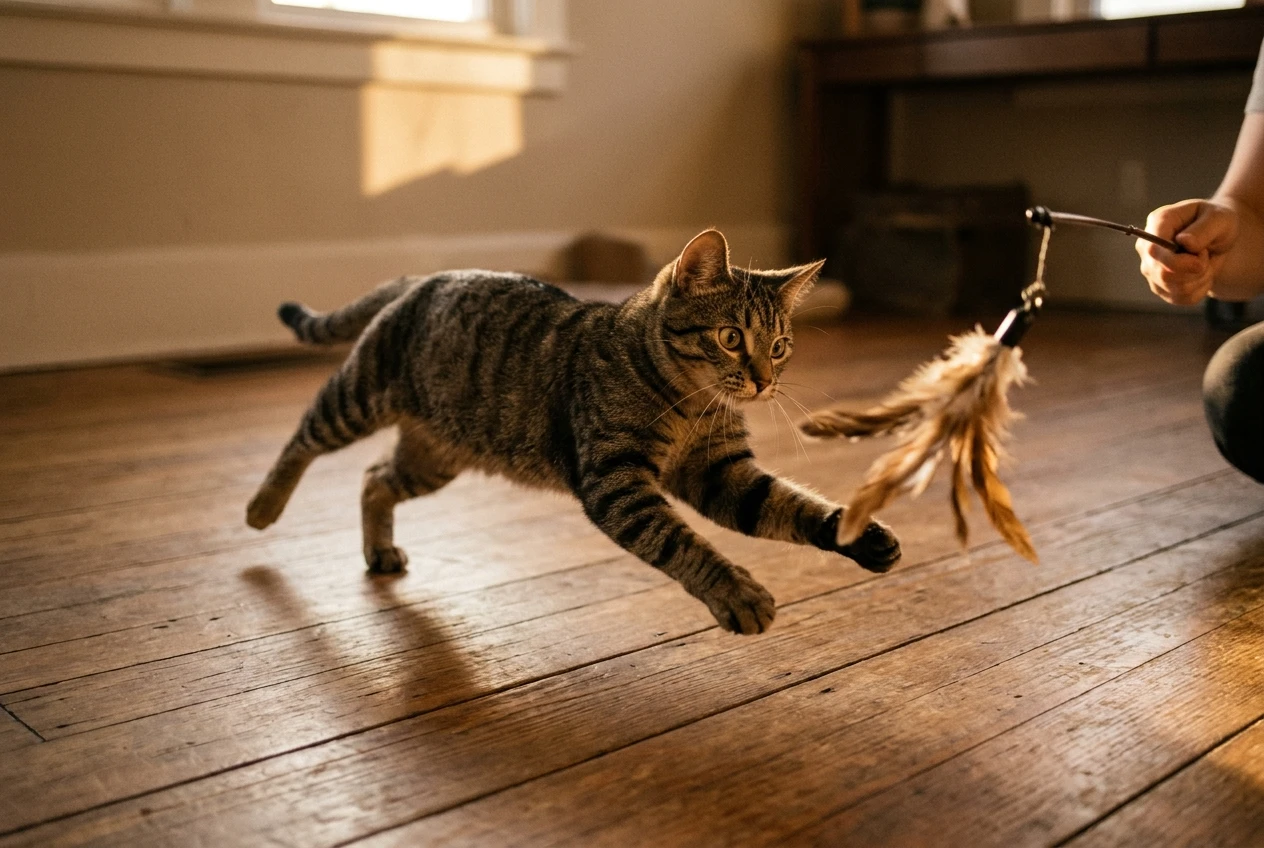
Cats that scratch mostly out of excitement or boredom often improve when they get regular, active play. A wand toy used for short sessions lets the cat stalk, chase and pounce. Finish a session by letting the cat catch the toy, then offer a meal or a small treat, which mirrors a natural hunt. Younger cats and kittens may need more play than adults. If your kitten seems unusually wired, our piece on how to recognize and deal with a hyper kitten has more detail.
Keep Nails in Good Condition
Trimming claws does not replace scratching, but it reduces the damage when scratching does happen. Blunt tips snag less on fabric and leave shallower marks.
- Trim only the sharp, clear tip of the nail. Avoid the pink core, called the quick, which contains blood vessels and nerves and will hurt and bleed if cut.
- Use clippers made for cats, and do it when the cat is relaxed, such as after a meal or when it is drowsy.
- Start by handling the paws gently over several sessions, rewarding the cat each time, before you attempt a trim.
- Trim one or two nails at a time if the cat is tense. There is no need to finish all of them in one sitting.
If you are unsure how to trim safely, ask a veterinarian or a groomer to show you. Soft nail caps, which are glued over the claws, are another option some owners use. They need to be replaced as the nail grows, and some cats dislike them, so they suit some households better than others.
Why You Should Never Declaw
Declawing is not a nail trim. The procedure removes the last bone of each toe, which is why it is described by many veterinary bodies as an amputation. It can cause pain and may lead to lasting problems with walking, using the litter box or biting. It is banned or discouraged in many places. Every method in this article is safer and works with the cat’s behaviour instead of removing a part of its body.
What Not to Do
Several common reactions make the situation worse.
- Punishing the cat after the fact. A cat cannot connect a scolding with scratching that happened minutes ago. It only learns that you are unpredictable.
- Using water sprays or loud noises. These can frighten the cat and damage trust, and a cat may simply learn to scratch when you are not in the room.
- Pushing the cat’s paws onto the post. Forcing a cat’s paws can create a negative association with the scratcher.
- Removing every scratcher because the cat ignores it. Instead, change the type, position or height until something works.
Cats that feel stressed or threatened may scratch more, not less. A calm household and predictable handling are part of the solution.
Kittens, Adults and Multi-Cat Homes
Kittens
Kittens begin scratching at a young age and are still working out what surfaces are acceptable. This is a good time to establish good habits, since a kitten has not yet built a long-standing preference for your sofa. Provide small scratchers early, place them where the kitten plays, and reward use. Introducing handling, carriers and everyday experiences early also helps, and our guide on how to socialize a 3-month-old kitten covers that stage.
Adult cats with an established habit
An adult cat that has scratched the same sofa for years has a strong preference, and it also has your sofa covered in its scent. Expect the change to take longer. Place the new scratcher directly on the spot, cover the old surface, and wait before moving anything. Clean the damaged area with an unscented cleaner made for pet messes to reduce the lingering scent, since cats are drawn back to marked places.
Multi-cat homes
In a home with several cats, scratching may be part of how the cats communicate with each other. Provide more than one scratcher, and spread them across different rooms so one cat cannot guard them all. Watching how the cats interact helps too. If one cat is blocking another from the scratching post, add another in a different spot.
When Scratching Signals a Bigger Problem
Occasional scratching of furniture is typical cat behaviour. A sudden increase, or scratching that appears alongside other changes, deserves attention.
Possible causes include:
- Stress or change. A new pet, a house move, new people, renovations or a change in routine can all lead a cat to scratch and mark more often.
- Boredom. Indoor cats without enough play, climbing space or window views may redirect energy into scratching.
- Territorial concerns. Seeing cats outside the window can trigger marking at the windows and doors.
- Pain or discomfort. An older cat with joint pain may scratch differently or avoid tall posts that require stretching. If a cat that previously used a post stops, or seems stiff, mention it to a veterinarian.
- Skin irritation. Scratching at itself is different from scratching furniture, but a cat that is overgrooming or scratching its own body needs a veterinary check.
If you notice other unusual signs alongside scratching, such as aggression, hiding, changes in appetite or litter box habits, take them seriously. Our piece on 5 cat behaviours to worry about describes what to watch for. A veterinarian can rule out medical causes, and a qualified behaviourist can help with persistent cases.
A Practical Plan to Follow
If you want a sequence to work through, this order keeps changes simple and lets you see what is helping.
- Observe your cat for a few days and note the surfaces, the posture and the locations of the scratching.
- Buy or place a sturdy scratcher beside the most damaged furniture, matching the texture and posture you observed.
- Add a second scratcher of a different type, such as a flat cardboard pad, near the cat’s sleeping area.
- Protect the furniture with tape, covers or guards on the targeted spots.
- Reward every use of the scratchers with praise, play or a treat, delivered straight away.
- Schedule daily play so the cat has an outlet for energy.
- Trim the nails regularly once the cat is comfortable with handling.
- Review after several weeks. If the cat is using the scratchers, begin removing the furniture protection one piece at a time. If it is not, change the type, height or position of the scratchers before changing anything else.
Give each change several days before judging it. Cats take time to adjust to new objects, and switching too many things at once makes it hard to tell what worked.
Frequently Asked Questions
Will my cat grow out of scratching the furniture?
Cats do not grow out of scratching, because it is a lifelong need. What changes is where they do it, and that depends on what is available and what has been rewarded.
Should I get one scratching post or several?
Several is better. A tall vertical post, a horizontal scratcher and one in each main living area give the cat choices and cover the different reasons for scratching.
How long does it take to redirect a cat?
It varies with the cat’s age, how long the habit has existed and how appealing the alternative is. Some cats switch within days, while others need weeks of consistent effort. Keep the setup the same and be patient.
My cat uses the post sometimes but still scratches the sofa. What now?
That is common. Check that the post is as stable and as tall as the sofa arm, move it closer to the spot, and keep the deterrent on the sofa a little longer. Also check whether the cat scratches the sofa at particular times, such as when you arrive home, and put a scratcher where that happens.
Is it cruel to cover the furniture or use tape?
No. Tape and covers change the surface without harming the cat. They work best when combined with an attractive alternative, so the cat has somewhere appropriate to go.
Scratching will be part of life with a cat for as long as you have one, so the useful goal is to put it where it does no harm. A stable scratcher in the right place, covered furniture while habits shift, short daily play and trimmed nails together handle most cases, and a veterinary visit is worth it whenever scratching changes suddenly or comes with other signs that something is wrong.