
Hello, Cat Enthusiasts!
If your cat bolts under the bed when the vacuum starts, flattens against the floor at a dropped pan, or spends the evening on alert after a loud bang outside, you are dealing with noise sensitivity. It is common, it ranges from mild to severe, and in most cats it improves with a patient, structured approach. This article covers how to recognise it, rule out medical causes, set up the home, and teach a cat to tolerate everyday sounds through gradual exposure paired with good things.
How to Tell Whether Your Cat Is Noise Sensitive
Cats rarely announce fear the way dogs do. A cat that is frightened by sound often goes quiet, and the signs are easy to miss if you are not looking for them.
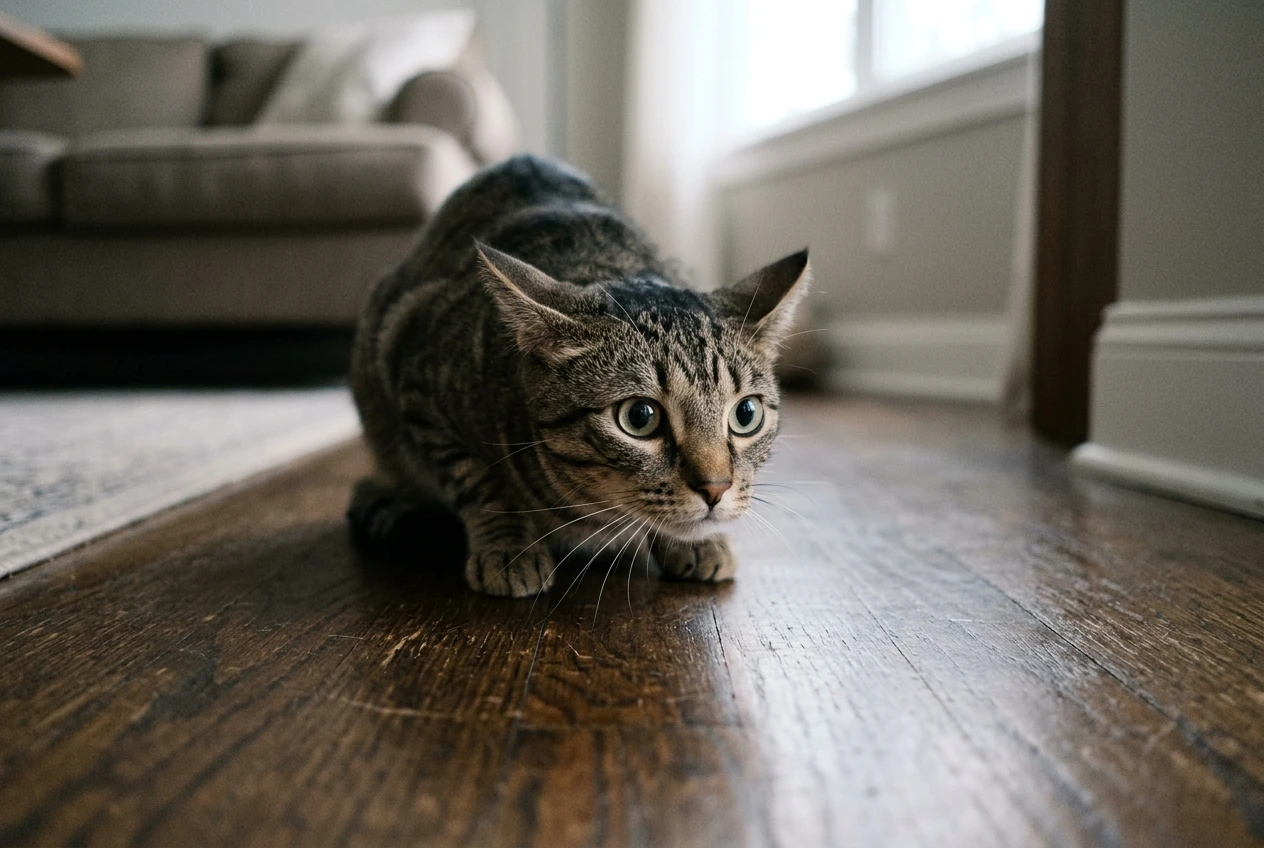
Common reactions to noise include:
- Running to hide, often in the same place each time
- Crouching low with the body flattened and the ears turned sideways or back
- Dilated pupils, wide eyes and a fixed stare toward the source
- A tail tucked tight against the body or lashing
- Freezing in place and refusing to move, eat or play
- Trembling, panting or drooling
- Sudden grooming, or pacing and restlessness
- Hissing, swatting or, less often, urinating or defecating outside the litter tray
Pay attention to what happens after the noise ends. A cat that shakes it off in a minute and goes back to normal has a mild reaction. A cat that stays hidden for hours, skips a meal, or becomes wary of the room where the sound occurred is more affected, and the fear is likely to grow if nothing changes.
It also helps to note which sounds cause trouble. Some cats react only to sudden, sharp noises such as a slammed door. Others dislike constant mechanical sounds like a washing machine, or high-pitched sounds like a smoke alarm chirp or a phone alarm. Others react to specific people, such as a shouting child or a visitor with a booming voice. Knowing the pattern shapes everything that follows.
Why Some Cats React More Strongly Than Others
Cats hear a much wider range of frequencies than people do, and they hear higher pitches that are silent to us. Many household devices produce tones near or above the limit of human hearing, so a cat may be bothered by something you cannot detect. A charger whine, a faulty light fitting or an ultrasonic pest repeller can all be sources.
Beyond that, several factors influence how a cat responds:
- Early experience. Kittens that meet a variety of ordinary household sounds at a gentle level during their early weeks tend to cope better as adults. Kittens raised in very quiet surroundings, or with little exposure, are more likely to be startled later. The article on how to socialize a 3-month-old kitten covers how to introduce new experiences to young cats.
- Temperament. Some cats are cautious by nature and take longer to recover from a surprise. This is part of their personality, and it can be managed even if it cannot be removed.
- A bad experience. A single frightening event, such as a loud crash while the cat was eating, can attach fear to a sound, a place or a time of day.
- Unpredictability. Cats cope better with noise they can anticipate. A vacuum that appears without warning is harder to tolerate than a sound that always follows a recognisable pattern.
- Health and age. Pain, anxiety disorders and changes in the senses can all make a cat more reactive than it used to be.
Start With a Vet Visit
If your cat has suddenly become jumpy, or its reactions have become stronger over a short time, book a veterinary check before starting any behaviour plan. A medical problem can mimic or worsen noise sensitivity.
Possible contributors a vet can look into include:
- Pain. A cat in pain from arthritis, dental disease or an injury may react sharply to anything that startles it, because it expects movement to hurt.
- Hearing changes. Ear infections, mites, and age-related hearing loss can all alter how a cat experiences sound, and a cat that hears poorly may be more easily startled by things that seem to appear from nowhere.
- Thyroid and blood pressure problems. Overactive thyroid and high blood pressure, both more common in older cats, can cause restlessness and heightened reactions.
- Cognitive changes in senior cats. Confusion and anxiety in older cats can show up as new fearfulness, night-time yowling and unusual startle responses.
Tell the vet which sounds trigger the reaction, how long it lasts and when it began. A short video of your cat reacting is useful, since cats often behave differently in a clinic. If the cat is more reactive in unfamiliar places, the article on how to carrier train a cat can make the trip itself easier.
Once the vet has ruled out a physical cause, or treated it, you can work on the behaviour with more confidence.
Make the Home Feel Safer First
Desensitization works best when the cat already feels secure. Before you begin any exercises, adjust the environment so the cat can cope with the noise it cannot avoid.
Create a retreat the cat chooses
Give your cat at least one place it can go when it is frightened, and let it decide when to use it. Good options include a covered bed, a cardboard box turned on its side, a cat tree with an enclosed cubby, or the space under a bed with a blanket draped near the edge. The spot should be quiet, away from appliances and doors, and not a place where the cat is likely to be disturbed.
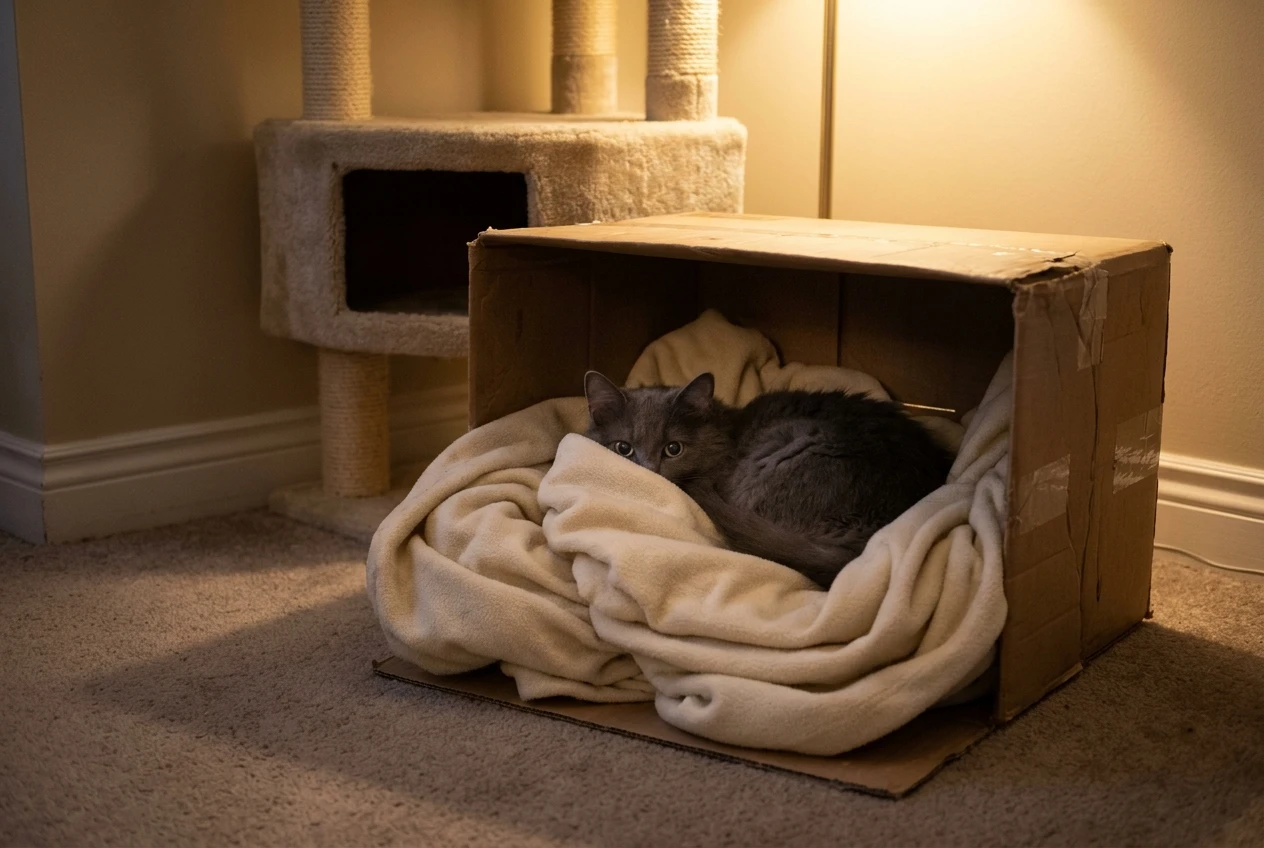
Do not pull the cat out of its hiding spot, even to comfort it. Being dragged out removes its sense of control and can turn the hiding place into somewhere that no longer feels safe. Sit nearby and speak softly if the cat seems to want company, and otherwise leave it alone.
Offer height and options
Many cats feel safer up high. A shelf, a cat tree or a clear windowsill gives them a way to observe without being exposed. Several options in different rooms let the cat pick where it wants to be depending on the noise. The page on basic indoor cat needs covers the setup a cat needs to feel comfortable at home.
Keep daily life predictable
Cats find routine reassuring, and a cat that knows when meals, play and quiet time occur has less reason to be on edge. Feed at regular times and keep the litter tray and water in calm, accessible spots. If you are working on a noise problem, it also helps to run the noisy appliances at similar times each day so they become part of the pattern. The article on the importance of routines for cats goes into this in more detail.
Cushion the noise you cannot change
Some sound reduction is simple and cheap:
- Close windows and curtains during traffic, construction or storms
- Run a fan, white noise machine or low-volume radio to blunt sudden sounds from outside
- Put rubber feet or felt pads under appliances that rattle
- Close doors gently and avoid slamming cupboards
- Keep the cat in a quiet inner room when you run the vacuum cleaner, blender or power tools
Some owners also use synthetic pheromone diffusers or calming supplements. Evidence for these products is mixed, and individual cats respond differently, so treat them as a possible extra and not the main fix. Ask your vet before giving your cat any supplement.
How Desensitization and Counterconditioning Work
The standard approach to noise sensitivity combines two techniques.
Desensitization means exposing the cat to the sound at a level so low that it does not trigger fear, then raising the level in small increments over time. The cat learns the sound predicts nothing bad.
Counterconditioning means pairing that sound with something the cat loves, such as a favourite treat, a play session or a meal. Over time, the sound starts to predict good things, and the emotional response changes from dread to mild interest or even anticipation.
Together, these two techniques change how the cat feels about the sound, which is different from teaching it to suppress a reaction. This matters because a cat that is merely enduring a noise can still be stressed internally, even if it does not run away. For a broader look at how cats pick up associations like these, see the article on how cats learn.
Building Your Sound Plan
List the triggers and rank them
Write down every sound that bothers your cat, then rank them from mildest to most upsetting. A cat that startles at the dishwasher but panics at the doorbell should begin with the dishwasher. Starting with an easy sound builds momentum and gives you practice with the method before you tackle the hardest one.
Find a controllable version of each sound
You need to play the sound at very low volume, which means recordings. Many everyday sounds can be found as audio files or videos online: vacuum cleaners, doorbells, thunder, fireworks, crying babies, barking dogs, power tools, and so on. Play them through a speaker or phone, and keep the volume control in your hand.
For sounds that cannot be recorded, such as a particular appliance, you can sometimes use the real thing at a distance. Run the dishwasher while the cat is in a room well away from it, for instance, so the noise reaches it faintly.
Choose rewards that carry real value
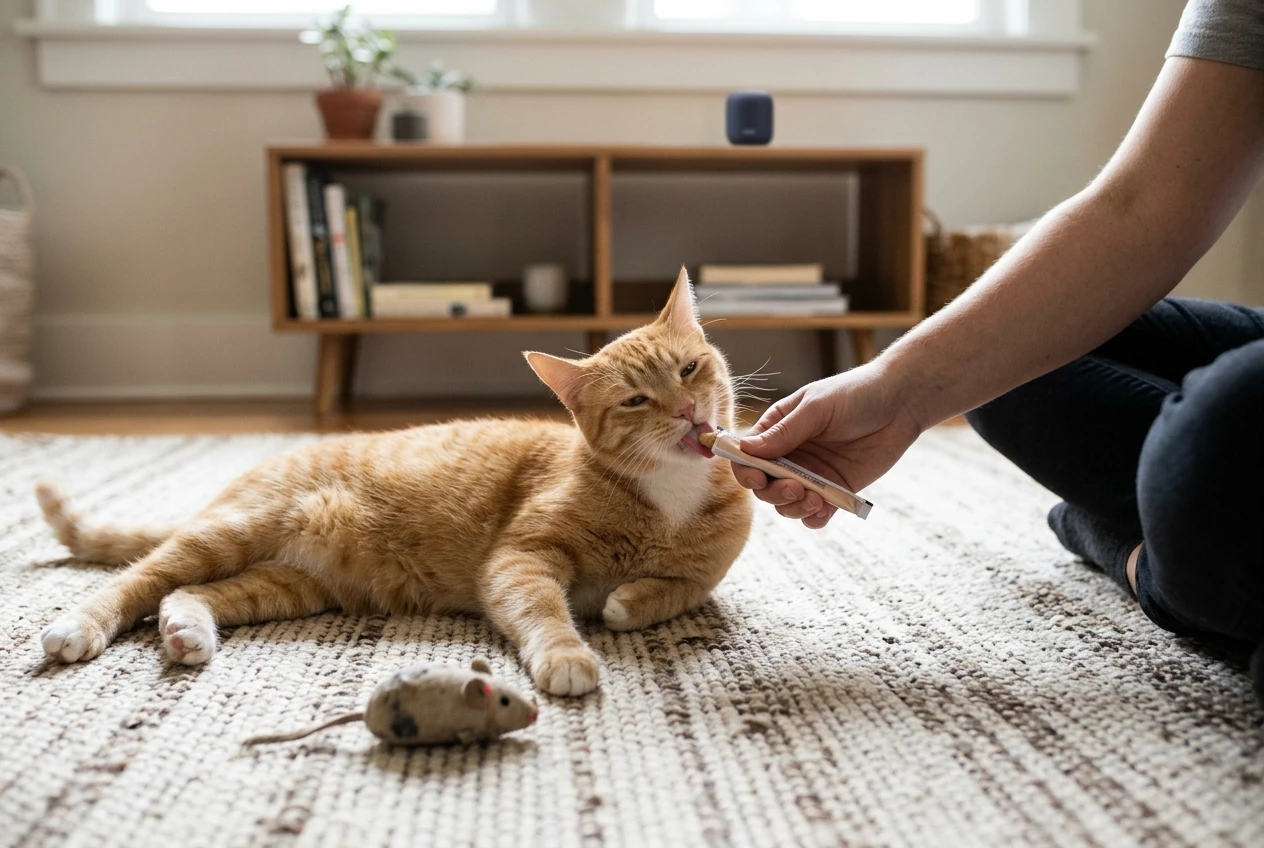
Pick something your cat finds exciting, and save it for these sessions. Small pieces of cooked chicken, lickable cat treats, freeze-dried meat or a favourite toy can all work. A food reward needs to be better than the cat’s regular meal. If your cat is too frightened to eat, the sound is too loud, and that is information you can use.
Running a Session
Keep each session short, calm and ended while the cat is still relaxed. A typical session might look like this.
- Choose a time when the cat is awake, calm and not too hungry or too full. Play with it briefly beforehand if it likes that.
- Settle in the room with the cat, with the speaker positioned away from it and the volume at zero or barely audible.
- Start the sound at a level the cat notices but does not react to. Ears may flick toward it, and that is acceptable. Any sign of fear means the volume is too high.
- While the sound plays, deliver treats or begin a game. Reward calm behaviour, and give the food while the sound is on.
- Stop the sound, then stop the treats. The reward should appear only while the noise is playing, so the cat links the two.
- End the session after a few minutes, or earlier if the cat shows any tension.
Run sessions once or twice a day if the cat is willing. When the cat has been relaxed at a given level across several sessions, raise the volume slightly. Raise it a little at a time, and drop back immediately if the cat reacts. If your cat startles, return to the last level it handled comfortably and stay there for a few more sessions.
Know what progress looks like
Early signs of improvement include the cat continuing to eat or play while the sound is on, looking at the speaker with relaxed eyes, or turning toward you when the noise starts because it expects a treat. A cat that begins looking for the treat as soon as it hears the sound has made the association you wanted.
Progress rarely moves in a straight line. A bad day, a real thunderstorm or a visitor can set the cat back. When that happens, go back a stage or two in the plan and continue. The right pace depends on the cat, and there is no benefit in rushing to the next volume level. Some cats improve over weeks, while others need months, especially if the fear is long-standing.
Applying the Method to Common Household Sounds
Vacuum cleaners
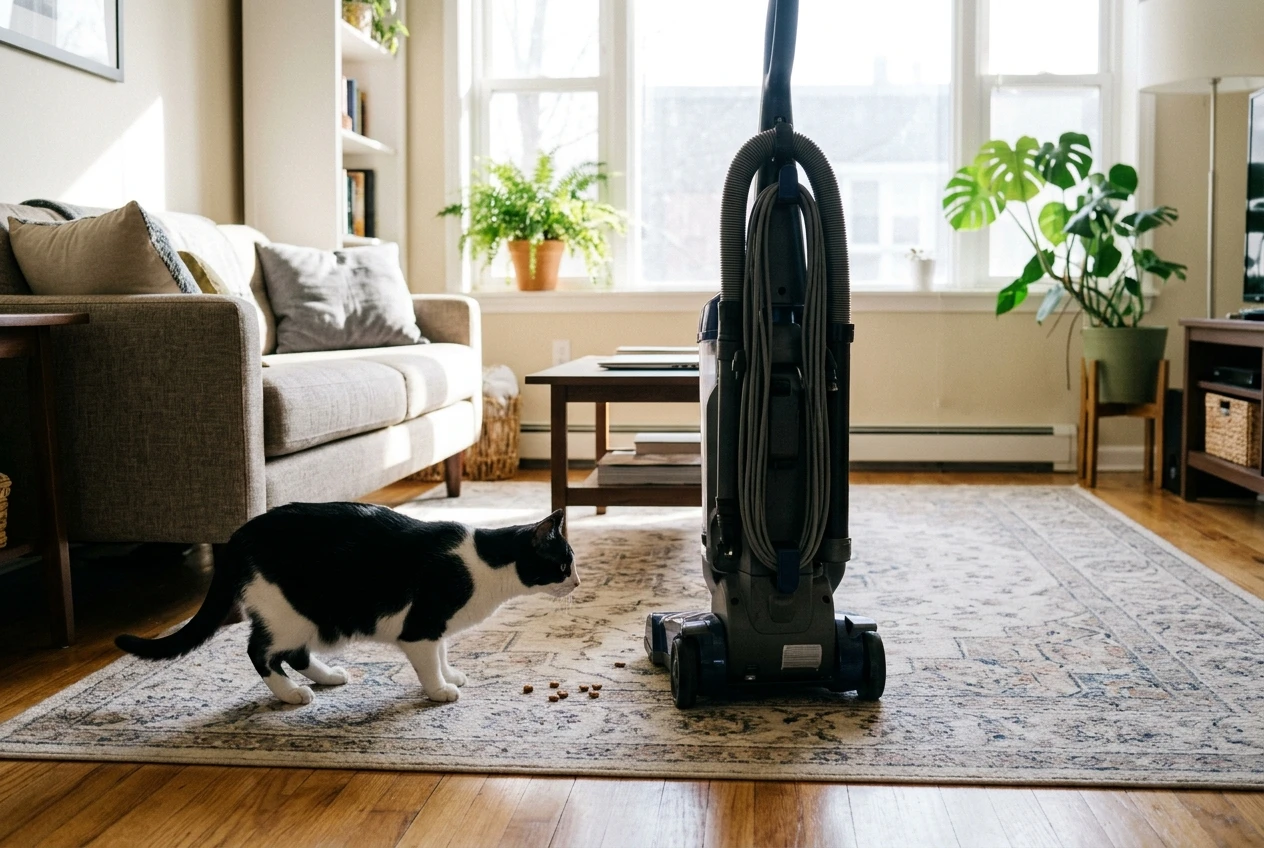
The vacuum is one of the most common triggers because it is loud, moves unpredictably and often comes toward the cat. Begin with the vacuum switched off in the room, and reward the cat for approaching it or ignoring it. Next, turn it on in a distant room with the door closed while the cat eats or plays. Over many sessions, bring it closer, then eventually run it in the same room at a distance, then move it around slowly. Pushing it toward the cat or cornering it will undo the work.
Doorbells and knocking
Record or find the sound, and play it quietly while giving treats. Once the cat is comfortable, add the real doorbell at the lowest practical level, ideally operated by a helper outside while you reward inside. Because visitors may add a second trigger, practise the doorbell on its own before combining it with a person entering.
Thunderstorms and fireworks
These are harder because you cannot control the real thing, and the sounds come with flashes, pressure changes and sometimes vibration. Desensitization with recordings, started well before the season, helps, but the real event may still be frightening. On the day, let the cat hide, close curtains, play background sound and stay calm yourself. The dedicated article on how to protect a cat from fireworks lays out what to prepare in advance.
Kitchen and laundry appliances
Dishwashers, washing machines, blenders, microwaves and extractor fans can usually be introduced gradually. Feed the cat a meal or give treats in a room away from the appliance while it runs, and move the feeding spot closer by a few feet at a time as the cat remains relaxed.
Household members
Raised voices, a child’s shrieks, loud television and music can also trigger a reaction. Explain to other members of the household what the cat is struggling with, and agree on a few simple rules: keep voices moderate near the cat, give it room to leave, and avoid sudden loud sounds near its resting places. Children can help by being the ones who drop treats on the floor during quiet sessions, as long as an adult supervises.
What to Avoid
Some well-meant reactions make noise sensitivity worse.
- Forcing exposure. Making a cat stay in the room with a frightening sound, sometimes called flooding, tends to deepen fear and can damage trust.
- Punishing the reaction. Shouting at a cat for hiding, hissing or having an accident adds a second source of fear to the first one.
- Moving too fast. If the cat reacts in a session, the level was too high or the step too big. Go back and slow down.
- Ignoring early signs. Flattened ears and a tense body are early signals. Stop the sound before the cat reaches full panic.
- Overusing the reward. If treats are available all day, they lose their power. Keep the best ones for training time.
- Inconsistent practice. Sporadic sessions produce slow, patchy results. A few minutes on most days works better than an hour once a week.
Comforting a scared cat is fine when the cat seeks it out. Research on fear in animals does not support the idea that comfort makes fear worse. If the cat comes to your lap, stay calm, let it settle, and do not restrain it.
When to Ask for Professional Help
Some cases need more than a home plan. Contact your vet, and ask about a referral to a qualified feline behaviourist, if you notice any of the following:
- The cat’s fear is intense or is getting worse despite your efforts
- It stops eating, grooming or using the litter tray for long periods
- It harms itself, you or other pets when frightened
- The reaction affects its daily life, for example avoiding a whole room
- The fear began suddenly in a cat that previously coped well
In severe cases, a vet may prescribe anti-anxiety medication to use alongside behaviour work. Medication is a decision for the vet, based on the individual cat’s health and history, and it is typically used to lower fear enough for the cat to learn from the exercises. It should never be started without veterinary guidance.
Sometimes a fearful reaction is part of a wider pattern. If the cat also shows changes in appetite, aggression, hiding or excessive vocalising, the article on 5 cat behaviours to worry about can help you judge how urgent it is.
Keeping Gains Over Time
Once your cat tolerates the sounds you worked on, keep the progress going.
- Revisit the sounds occasionally with a treat, especially seasonal ones such as fireworks or storms, so the association stays fresh.
- Introduce new sounds at low levels before they become a problem, for example before moving a new appliance into the house or having guests stay.
- Watch for changes. A cat that was relaxed and suddenly becomes jumpy needs a vet check, because pain or illness may be the cause.
- Continue to offer retreats, vertical space and a predictable routine, since these support confidence in everything the cat does.
A noise-sensitive cat will probably never be entirely unbothered by every sound, and that is a reasonable outcome. The aim is a cat that notices a noise, recovers quickly, eats and plays normally afterward, and knows where to go if it needs to feel safe. With a vet check, a secure home, short regular sessions at a pace the cat sets, and rewards worth working for, most cats become noticeably calmer around the sounds of ordinary life.